Painter guide
Does Your Ashgrove or Paddington Home Have Heritage Restrictions on Paint Colours?
Does Your Ashgrove or Paddington Home Have Heritage Restrictions on Paint Colours?
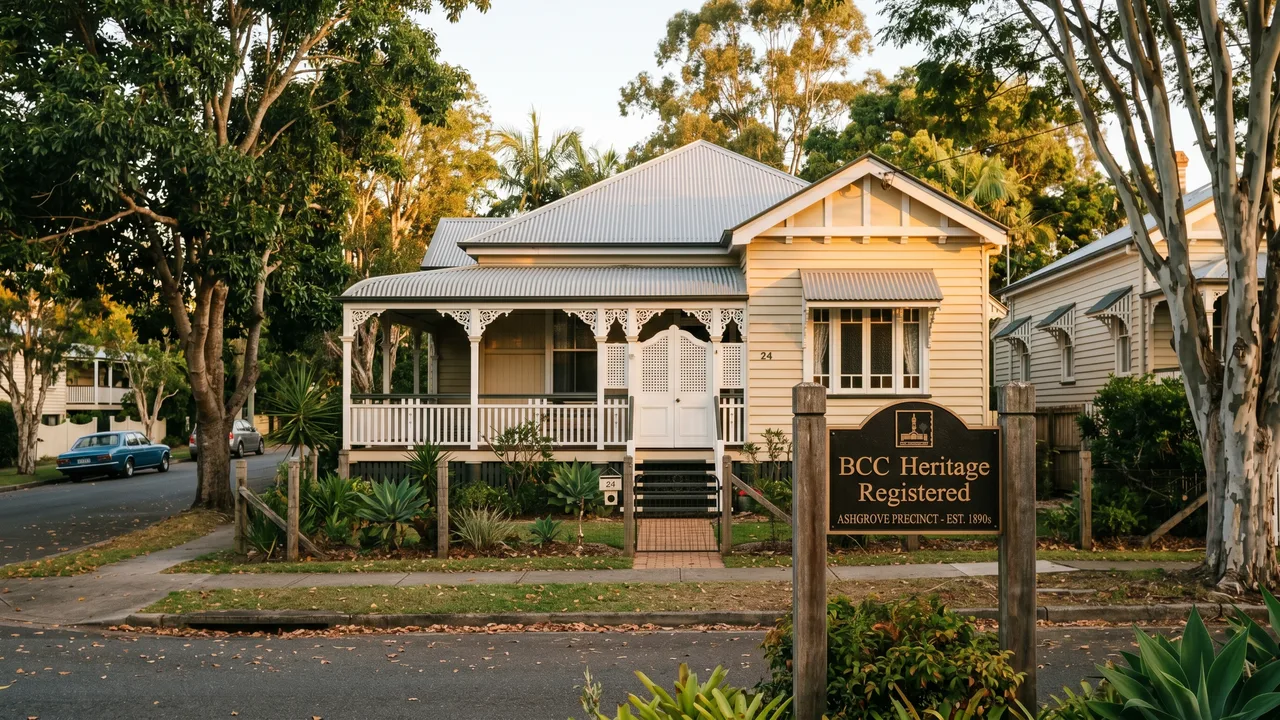
Probably, yes — but the answer depends on exactly where your home sits and how it's classified. Many homes across Ashgrove, Paddington, Red Hill and Bardon fall within Brisbane City Council's heritage overlay or character residential zones, and both carry expectations about exterior colour choices. The restrictions aren't always as tight as people fear, but ignoring them can create real headaches when you sell or if a neighbour lodges a complaint.
Here's what you actually need to know before you pick up a colour fan.
How Brisbane's Planning Scheme Handles Heritage and Character Homes
Brisbane City Council uses two broad categories that affect paint colour decisions.
The first is a heritage listing, which applies to buildings of recognised cultural or historical significance. These properties sit on either the local heritage register or the Queensland Heritage Register. Rules here are stricter, and in many cases you'll need a development application (DA) before repainting in a noticeably different colour scheme.
The second is the character residential zone, which covers large parts of the Inner West including significant portions of Paddington, Ashgrove, Bardon and Red Hill. This zone doesn't require a DA for most standard repaints, but it does expect that any work is sympathetic to the building's original character. That's a softer test, but it's still a real consideration.
You can check your property's overlay status on Council's PD Online mapping tool. Type in your address and look for "heritage overlay" or "character residential" in the planning scheme layers. It takes about three minutes.
What the Rules Actually Say About Colour
For a individually listed heritage property, the Queensland Heritage Act and Council's own heritage guidelines ask that external colour changes are "compatible with the cultural heritage significance" of the place. In practice, this means Council's heritage officers generally want to see colours drawn from documented historical palettes for the era and style of the building.
For pre-war Queenslanders, that typically means muted earth tones, warm creams, greens and greys rather than anything bold or contemporary. The original Federation and Californian Bungalow homes that line the streets of Paddington and Rosalie were often painted in colours derived from natural pigments, so a heritage palette isn't arbitrary — it's historically grounded.
In the character residential zone, there's no approved colour list as such. Council's character code asks that alterations and work "maintain or enhance" the character of the area. Practically speaking, a like-for-like repaint (same colour, fresh coat) rarely draws any scrutiny at all. A significant colour change on a prominent street-facing facade is where owners occasionally get pushback, usually from neighbours rather than Council acting on its own.
For the vast majority of Inner West homes, a straight repaint in a thoughtfully chosen colour won't require a DA, won't trigger a compliance issue and won't attract any official attention.
Where Ashgrove and Paddington Sit Specifically
Paddington (4064) has the highest density of heritage-listed and character-coded properties in our cluster. The ridge streets — Given Terrace, Latrobe Terrace and the side streets running off them — include a mix of individually listed properties and broader character precincts. If your home is on or near those streets, it's worth a quick planning check before committing to a colour.
Ashgrove (4060) has fewer individually listed properties but many homes fall under the character residential overlay, particularly the older estates closer to the Enoggera Creek corridor. The suburb also has a number of pre-war homes on large blocks that, while not formally listed, sit in areas where neighbours and Council both tend to notice significant changes.
Bardon (4065) and Red Hill (4059) are similar to Ashgrove in this regard. The Gap (4061) has much lighter heritage overlay coverage — most homes there are post-war and fall under standard residential codes with no colour guidance at all.
Auchenflower, Toowong and Milton tend to have a mix, with some streets near the river having heritage significance and others being unremarkable post-war residential.
The Practical Trade-Off: Apply for Approval or Choose a Safe Colour?
If your home is on the heritage register, you don't have a choice — you need to work within the guidelines, and a DA may be required. That process typically takes four to six weeks and costs a council application fee, plus any consultant time if you want help preparing the documentation.
If your home is in the character zone but not individually listed, you have a practical choice to make. You can:
- Choose a colour that is clearly sympathetic to the era and style of your home (low risk, no paperwork, typically no issues)
- Choose a colour outside the historical palette and proceed without a DA (moderate risk, possible neighbour complaints, occasional Council inquiry)
- Seek a pre-lodgement meeting with Council's heritage officers for informal guidance (free, low effort, gives you confidence before committing)
For most homeowners in Ashgrove and Paddington, the sensible path is to choose a colour with some historical grounding and get on with the job. The pre-lodgement meeting option is underused and worth considering if you're torn between two schemes.
One thing worth knowing: paint colour is generally a "low intervention" change in heritage assessment terms. Most professional heritage consultants and Council officers are far more concerned about alterations to fabric (removing timber fretwork, changing window profiles, adding rendered features to a timber house) than about paint colour within a reasonable historical range.
What a Heritage Palette Actually Looks Like
The term "heritage palette" sometimes makes people picture drab, institutional colours. That's not accurate. Historical Australian domestic colour schemes were often quite varied and some were surprisingly rich.
A well-chosen heritage scheme for a Queenslander or Federation bungalow in Paddington might include:
- A warm off-white or cream body colour (think raw linen rather than bright white)
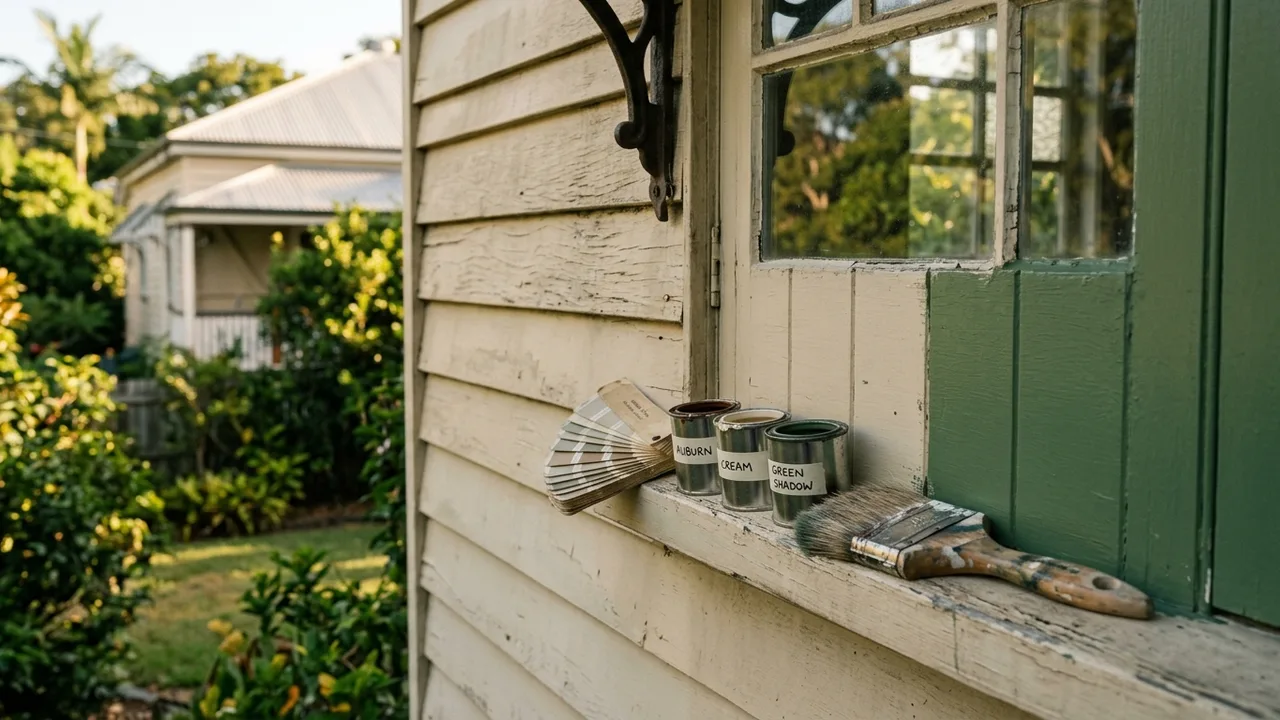
- A deeper contrasting trim colour on fretwork, fascias and window frames (sage green, deep burgundy, slate grey or dark chocolate are all period-appropriate)
- A softer or matching tone for the roof if it's being painted as part of the same project
Dulux, Taubmans and Haymes all publish heritage colour ranges that are widely accepted in the Brisbane context. Dulux's Heritage collection and Haymes' Artisan range are two starting points worth looking at when you're doing initial planning.
Bright white as a body colour, while fashionable, is technically not a traditional pre-war colour. It's generally tolerated in the character zone but can look out of place on a detailed Queenslander with ornate fretwork. That said, it's your home.
Before You Book a Painter: A Short Checklist
Before finalising your colour scheme, it's worth running through a few quick steps:
- Check PD Online for your property's heritage or character overlay status
- If you're in the character zone but not listed, choose a colour within a recognisable historical range
- If you're individually listed, contact Council's heritage team before committing to any change in colour scheme
- Get your painter to confirm they're experienced with heritage and character homes — surface prep on old Queenslander timber is different from a modern render job
- Ask for a written quote that specifies the paint system being used, not just the brand and colour
Most repaints we do across Ashgrove, Paddington, Bardon and Red Hill require no formal approval at all. But having five minutes of clarity upfront is always better than a conversation with Council after the fact.
A Closing Thought
Heritage and character codes exist to protect the streetscapes that make Inner West Brisbane genuinely pleasant to live in. They're not there to trap homeowners. If your home is in the character zone, a well-chosen, period-sympathetic colour scheme will almost certainly satisfy any scrutiny, look better on your specific house, and add to rather than detract from your property's appeal.
If you're unsure about your specific address, Council's heritage team takes phone inquiries and they're generally helpful rather than obstructive. And if you'd like to talk through colour options with someone who works on these homes regularly, we're happy to have that conversation without any obligation on your end.
Quick answers