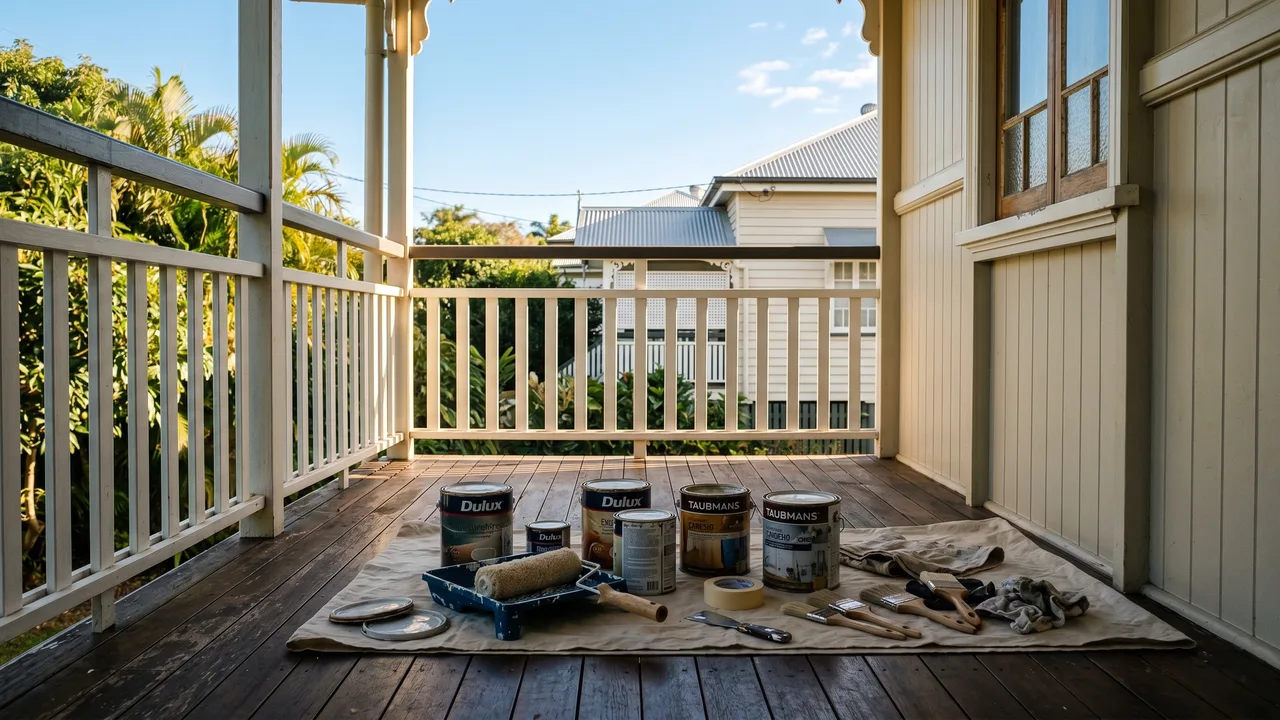
Painter guide
When Is the Best Time of Year to Paint a Brisbane Home?
The Short Answer First
The best time to paint a Brisbane home is late autumn through early winter, roughly April to July. You get mild temperatures, lower humidity, and a decent stretch of dry days. That said, with a bit of planning, you can get a quality result in other months too.
Why Brisbane's Climate Makes Timing More Important Than Most Places
Paint needs two things to cure properly: moderate temperature and low humidity. In Brisbane, both of those can work against you depending on the time of year.
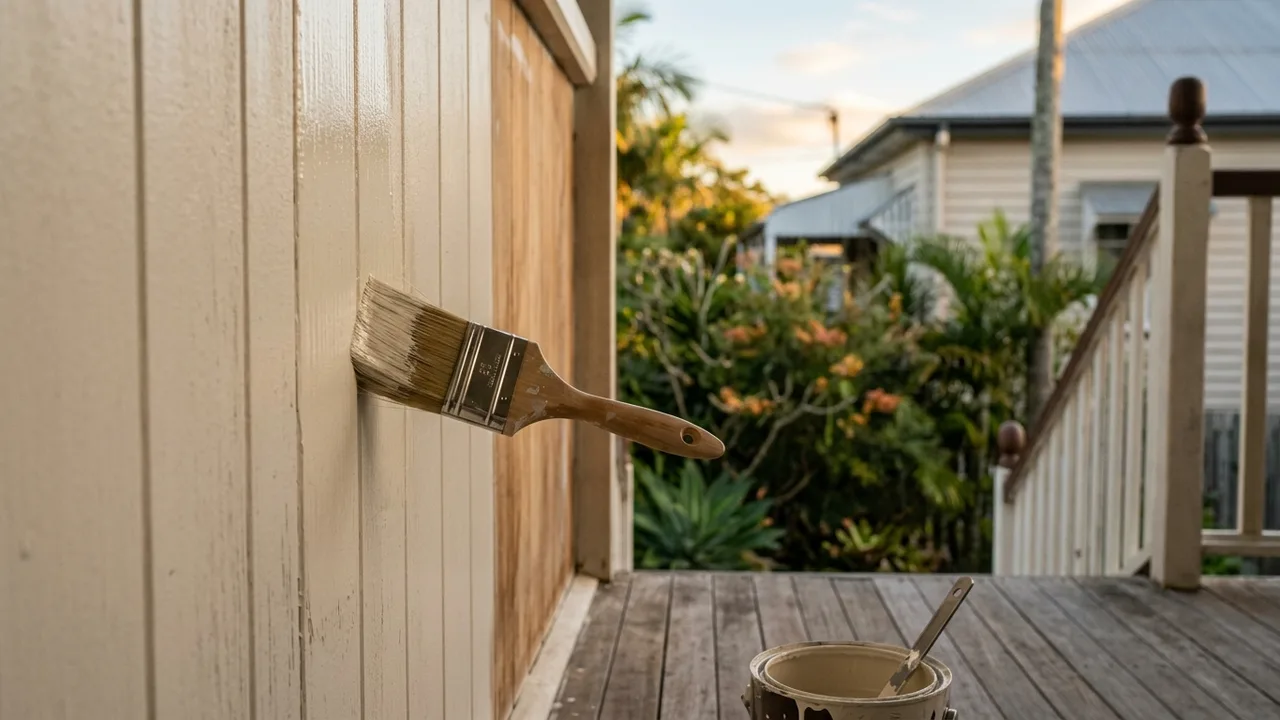
The subtropical climate means summers bring heavy rain, high humidity, and afternoon storms that roll in fast. Winters are dry and mild, often sitting in the 15-25°C range during the day. That difference matters enormously for paint adhesion and drying time.
Most water-based paints cure best between 10°C and 35°C. That sounds like a wide window, but it's the humidity that tightens it up. When relative humidity climbs above 85%, paint dries slowly and unevenly. Blistering, peeling, and poor adhesion are common outcomes. In Inner West Brisbane suburbs like Ashgrove, Bardon, and Red Hill, summer humidity regularly sits above 80% for days at a time. That's not ideal for exterior work.
Oil-based products are even fussier. They need longer drying windows between coats, so a summer afternoon storm rolling in at 3pm can ruin a coat applied at 9am.
The Sweet Spot: April to July
Late April through to late July is where conditions line up best, especially for exterior jobs.
Here's why this window works:
- Humidity drops. Brisbane's relative humidity in June and July typically averages around 50-60%, well below the summer highs of 70-85%.
- Temperatures stay comfortable. Days in the low-to-mid 20s are ideal for curing. Nights rarely drop below 10°C in Inner West Brisbane, which keeps evening-applied coats from being interrupted.
- Fewer afternoon storms. Summer's convective storms are largely gone by May. You can plan a multi-day exterior job with reasonable confidence.
- Timber behaves better. Queenslanders and weatherboard homes across Paddington, Toowong, and Ashgrove have timber cladding that expands and contracts with temperature and moisture. Painting in drier conditions means the timber is more stable and the paint film forms a better bond.
If you're planning an exterior repaint of a Queenslander or a weatherboard in Red Hill or Bardon, this is the window to book into. Demand tends to peak in June and July, so getting your quote sorted in March or April is a smart move.
What About the Other Months?
August and September are still quite good. Humidity is low and temperatures are rising. The main risk as you push into October is that days start getting hotter, which can cause paint to dry too quickly on sun-facing walls. Fast drying sounds like a benefit, but it can lead to brush marks and lap lines.
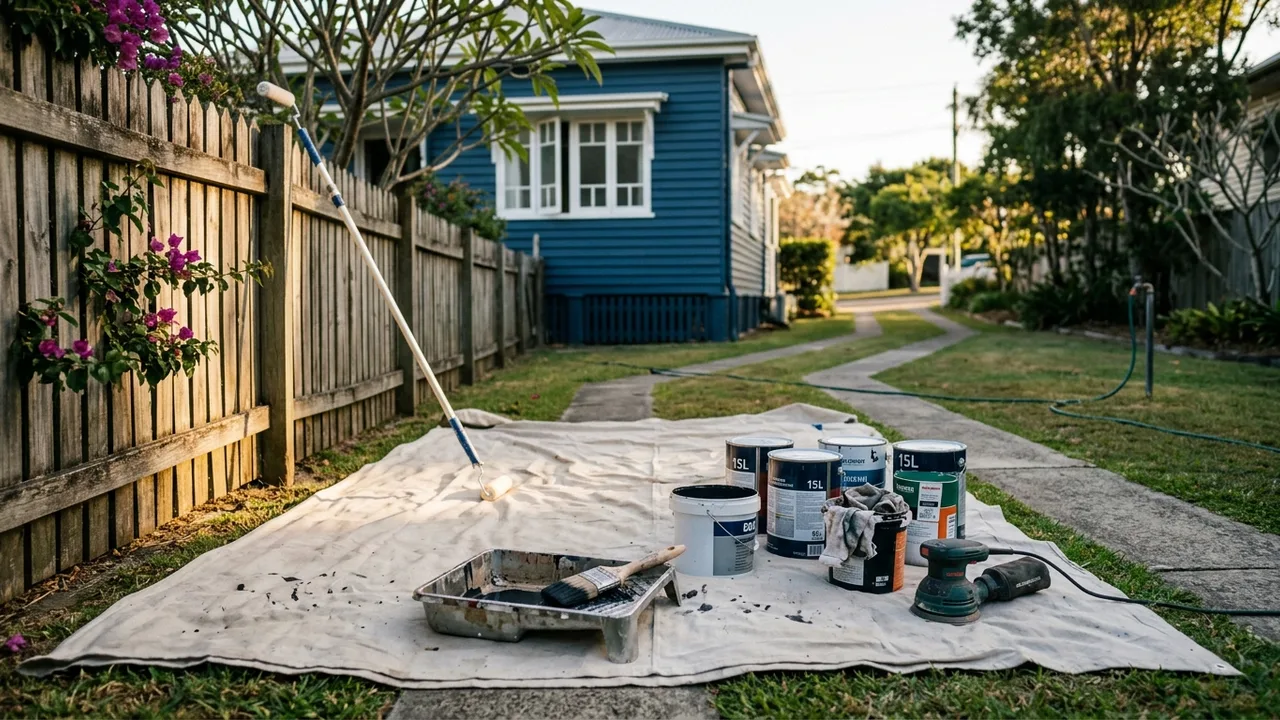
October to December is manageable with careful scheduling. Early morning starts matter here. A painter who gets on the walls by 7am can complete a coat before the surface temperature climbs past 35°C. North-facing and west-facing walls become tricky from about November onwards.
January and February are the hardest months for exterior work in Brisbane. High humidity, frequent afternoon thunderstorms, and sustained heat make it genuinely difficult to get good results on an exterior. Most experienced local painters will be honest with you about this. We generally steer away from committing to exterior repaints through the peak of summer unless the job is mostly covered or sheltered.
March is a transition month. Humidity starts to ease but Brisbane can still get late-season tropical rain. A decent run of dry weather in March is possible, and some years it's perfectly fine. It's worth watching the 10-day forecast closely.
Interior work is a different story. Kitchens, living rooms, bedrooms, and hallways don't face the same weather risks. Interior repaints can be done year-round with the windows open to ventilate. Summer is actually a popular time for interior work because residents are away on holidays and the home is empty. We do plenty of interior jobs across Auchenflower, Milton, and Toowong through December and January for exactly that reason.
Roof Painting: A Slightly Different Calculation
Roof painting follows the same broad rules as exterior painting, but with a few extra considerations.
A Colorbond or terracotta tile roof sits in full sun. In summer, the surface temperature of a Brisbane roof can exceed 60°C by mid-morning. Applying a protective coating to a surface that hot causes the product to skin over before it penetrates properly. You lose adhesion and the finish can look patchy.
For roof painting across our Inner West cluster, we aim to schedule these jobs in May, June, and July where possible. The surface temperatures are workable by 8am and stay manageable through the day. If a roof job is urgent in warmer months, early starts and avoiding afternoons entirely is the approach.
One honest note: no matter how good the timing, a roof repaint needs thorough surface prep. A proper pressure wash to remove lichen, moss, and chalky oxidation is the foundation of a job that lasts. Skipping it to save $200 is a false economy.
What If Your House Just Needs Painting Now?
Sometimes the paint is peeling, the timber is exposed, or the landlord needs the job done by a specific date. Timing flexibility isn't always possible.
In that case, here's the realistic trade-off breakdown:
- Interior now vs later: No meaningful trade-off. Do it whenever suits you.
- Exterior in summer: Possible with careful planning (early starts, shaded walls first, watching forecasts), but expect slightly higher risk of rework and allow longer between coats. A good prep job is even more critical.
- Exterior in peak winter: Best outcome, smoothest process, lowest risk of weather delays.
- Roof in summer: Generally not recommended unless urgent. If urgent, early-morning scheduling only.
Budget is another factor. There's no single "cheap season" for painting in Brisbane since the material costs are the same year-round. Labour availability can be tighter in June and July, so booking early matters more than hunting for a discount.
A Practical Recommendation
If you have control over the timing, aim to book your exterior repaint for May or June. Get your quote done in March or April so you're not scrambling. For a heritage Queenslander in Ashgrove, Paddington, or Bardon, good prep and stable conditions make a measurable difference to how long the finish lasts.
For interior work, book it when it suits your household, not the calendar.
And if you're in a situation where the job needs to happen regardless of season, talk to whoever you're engaging about their plan for weather management, surface prep, and drying times between coats. A painter who gives you a straight answer on those questions is worth more than one who just tells you what you want to hear.
If you'd like a straightforward quote on a repaint in Ashgrove or the surrounding suburbs, we're happy to come out, look at the job, and give you an honest assessment of timing and cost. No pressure, just a conversation.
Quick answers