Painter guide
Why Is the Paint on My Queenslander Peeling and Cracking?
Why Paint Peels on a Queenslander: The Short Answer
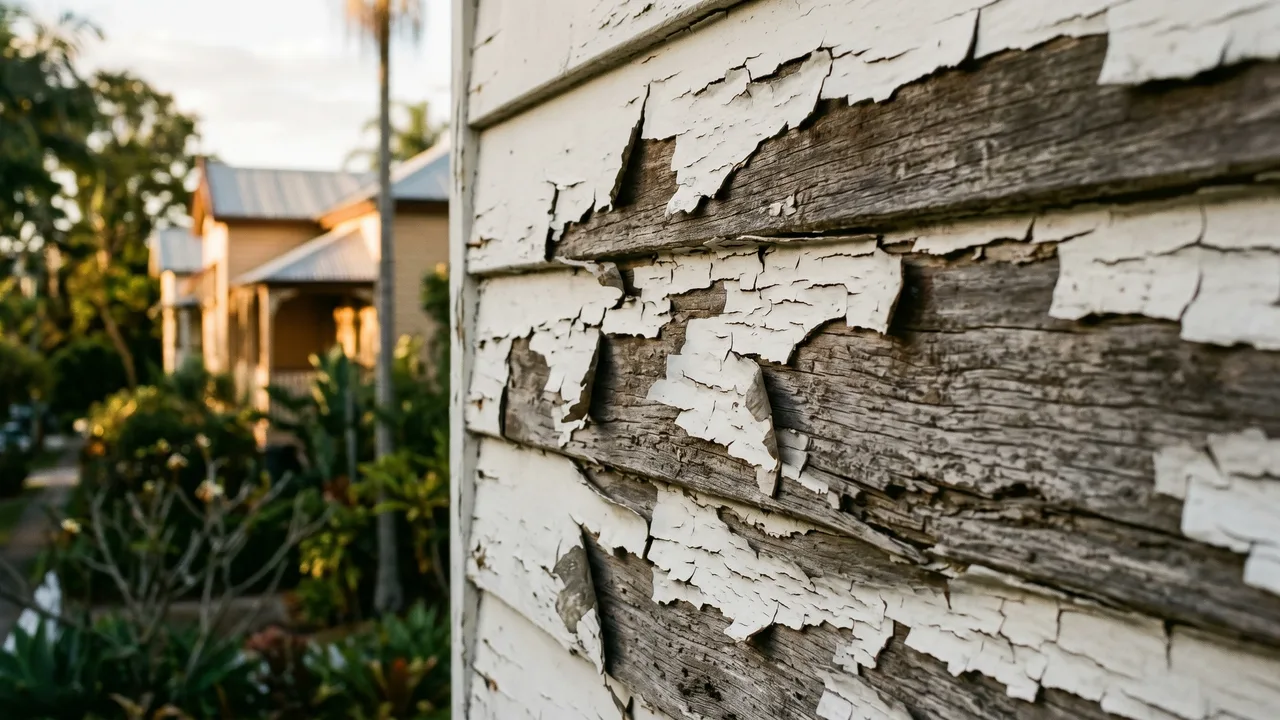
Paint fails on Queenslanders for one main reason above all others: moisture. Brisbane's subtropical climate pushes humidity into timber that was never sealed properly, or was sealed years ago and has since lost its protection. That moisture swells the wood fibres, breaks the bond between paint and substrate, and the film lifts, cracks or bubbles. Everything else, poor prep, wrong product, too many coats over time, is usually a secondary factor on top of that core problem.
The Timber Is Moving, Constantly
A Queenslander is a living structure in a way that brick veneer simply is not. The hardwood joinery, weatherboards, fascias and soffits are all expanding and contracting with temperature and humidity changes every single day. In Brisbane's Inner West suburbs like Ashgrove, Bardon and Red Hill, that cycle is relentless. Hot dry westerlies in spring, heavy summer humidity, cooler dry winters. Timber responds to every shift.
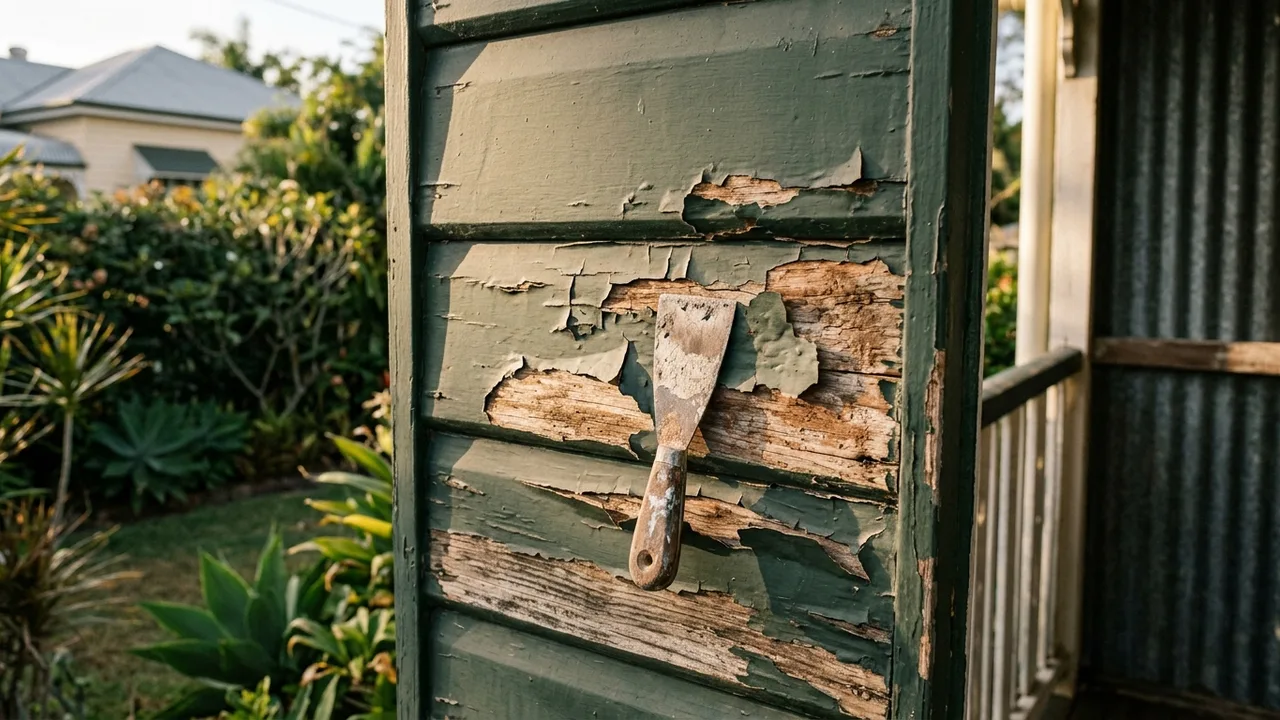
When paint film cannot flex with that movement, it cracks along the grain. Once a crack opens, water gets in. The substrate softens, the adhesion fails further, and you end up with the classic Queenslander pattern: fine hairline cracks along the boards in dry weather, then bubbling and peeling sheets after the wet season.
This is why product choice matters as much as preparation. Rigid oil-based paints over flexible old substrates tend to fail faster than a quality acrylic or an acrylic-alkyd hybrid that can move slightly with the timber. But no product covers a preparation shortcut. If you paint over cracked, dirty or chalking old film without cutting it back first, the new coat inherits every weakness underneath.
Moisture Entry Points Most People Overlook
The obvious culprit is weatherboards exposed to driving rain. But in our experience working on homes in Paddington, Auchenflower and Toowong, the damage usually starts somewhere less visible.
Check these spots first:
- End grain on windowsills and door frames. End grain soaks up moisture far faster than face grain. If the end grain is bare or lightly painted, the sill is absorbing water from underneath even when the face looks fine.
- Gaps at joins and mitres. Caulk fails. When the sealant between a window architrave and the wall boards opens up, water sits in the gap and wicks directly into the timber behind the paint film.
- Soffits above bathrooms and laundries. Steam from inside the house pushes outward. If the exhaust fan vents into the ceiling cavity rather than outside (common in older Inner West homes), the soffit boards stay damp for days after every shower.
- Gutters and downpipes that overflow. A blocked gutter on a Queenslander soaks the fascia board with every rain event. The paint on that fascia might look intact but the timber beneath is often soft or even beginning to rot.
- Subfloor humidity. Queenslanders built on high stumps allow airflow underneath, which is the whole point. But if the subfloor is enclosed or landscaping directs water toward the stumps, that moisture rises through the floor framing and eventually into the wall linings and external cladding from the inside out.
None of these are dramatic failures. They are slow, steady, and they explain why a home that was repainted five years ago can look fine on most walls but terrible around specific windows or on one particular elevation.
The Build-Up Problem: Too Many Coats Over Too Many Years
A lot of Queenslanders in suburbs like Rosalie and Ashgrove have not been stripped back to bare timber since they were built. Each decade added another coat. Some of those coats were oil-based, some were acrylic, some were applied to a surface that was barely cleaned first.
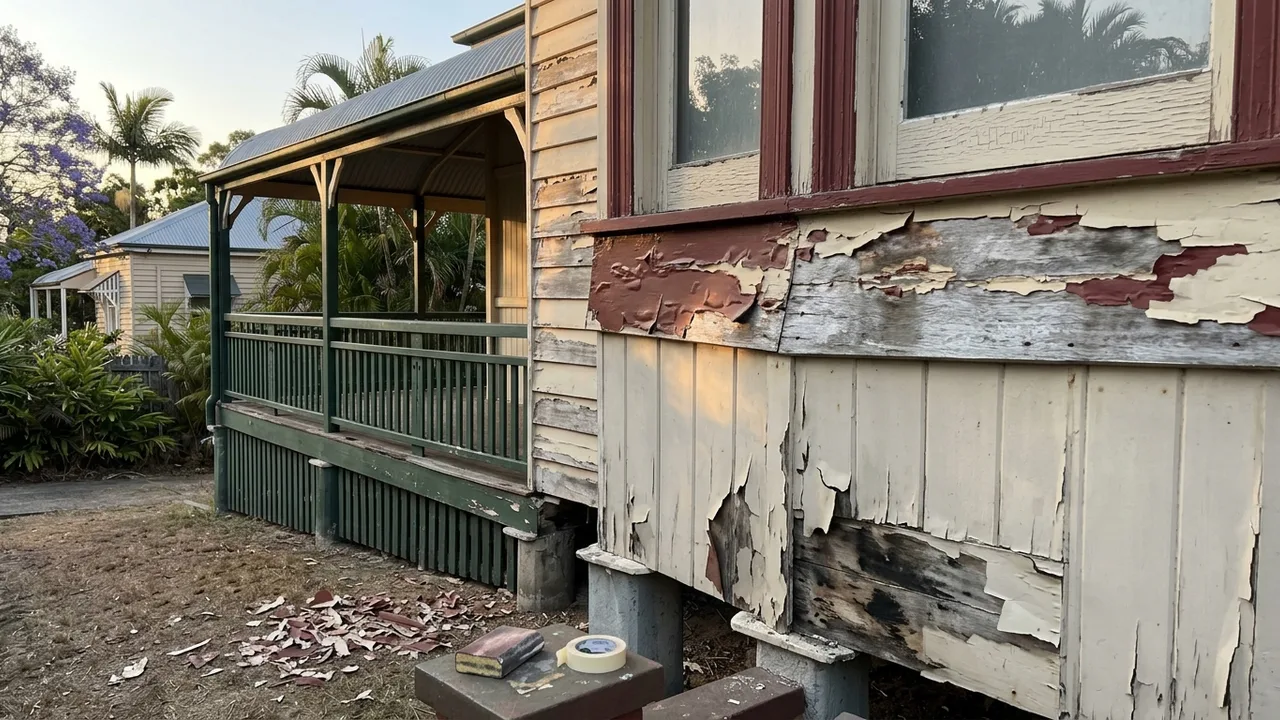
That build-up creates its own failure mode. The film gets thick and rigid. When the timber flexes, the whole stack moves as one mass and eventually the bond to the substrate gives way in chunks rather than hairlines. If you have seen sheets of paint peeling off a Queenslander rather than fine cracks, that is usually what you are looking at.
The honest answer here is that a proper repaint on a heavily layered Queenslander takes longer and costs more than a simple coat-over. A thorough job involves scraping back loose and flaking paint, sanding feathered edges, priming bare spots and filling cracks before a single topcoat goes on. On a full exterior in the Inner West, that preparation work can account for 40 to 60 percent of the total labour time. It is not padding. It is the difference between a finish that lasts three years and one that lasts ten.
Sun, Salt Air and Organic Growth
Brisbane's UV intensity accelerates paint degradation faster than a lot of homeowners expect. A north- or west-facing elevation takes a beating through summer. The binder in the paint film breaks down, the surface chalks (you can test this by rubbing your palm across the wall, if it comes away dusty white, the film is chalking), and adhesion weakens.
Salt air is a factor for bayside suburbs like Wynnum or Manly but matters less for the Inner West cluster. Ashgrove, The Gap and Bardon sit far enough inland that salt deposition is not a primary driver of paint failure. What does matter inland is biological growth. Brisbane's humidity supports mould, mildew and lichen readily, and once a colony establishes in a paint film, it physically degrades the surface. Painting over mould without treating and washing the substrate first is one of the most common mistakes on DIY repaint jobs. The mould grows straight through the new coat within a season.
A proper pressure wash with an appropriate cleaning solution before any repaint is not optional. It is foundational.
What You Can Reasonably Do Yourself and Where to Stop
A competent DIYer can handle a few things on a Queenslander without drama:
- Washing down a small elevation with sugar soap and a scrubbing brush
- Filling minor cracks in painted surfaces with a flexible exterior filler and touching up with a matching acrylic
- Applying a deck oil to a flat, accessible deck surface that is in reasonable condition
Where DIY gets risky on a Queenslander is working at height (the character of these homes means ground-floor eaves can sit 4 to 5 metres up), dealing with extensive paint build-up that needs mechanical sanding, and identifying the difference between cosmetic surface cracking and cracking that signals timber movement or decay underneath. Sanding old paint on a pre-1970s home also raises the question of lead paint. Homes built before 1970 in the Inner West very likely have at least one lead-based coat somewhere in the system. Disturbing that without the right precautions is a genuine health risk, not a bureaucratic one.
If the peeling is localised to a single board or small area and you are confident about what you are dealing with, touch-up work makes sense. If you are looking at widespread failure across multiple elevations, or the timber feels soft when you press it, the job warrants a professional assessment before any paint goes on.
A Practical Starting Point
If you are looking at your Queenslander and wondering whether the paint can be patched or whether you need a full exterior repaint, the most useful thing you can do is walk around the home on a dry day with a screwdriver. Press the tip gently into areas where paint is lifting or discoloured. If the timber is firm, you are likely dealing with a paint failure that prep and repainting can fix. If it gives, goes soft or crumbles, you have a timber repair job that needs to happen before anyone picks up a brush.
We work on Queenslanders and character homes across Ashgrove, Paddington, Bardon, Red Hill, Toowong and the surrounding Inner West suburbs. If you want a straight assessment of what your exterior actually needs, rather than a quote that assumes you want the whole thing painted tomorrow, give us a call and we can have a look.
Quick answers