Painter guide
How Often Does a Queenslander Actually Need Repainting?
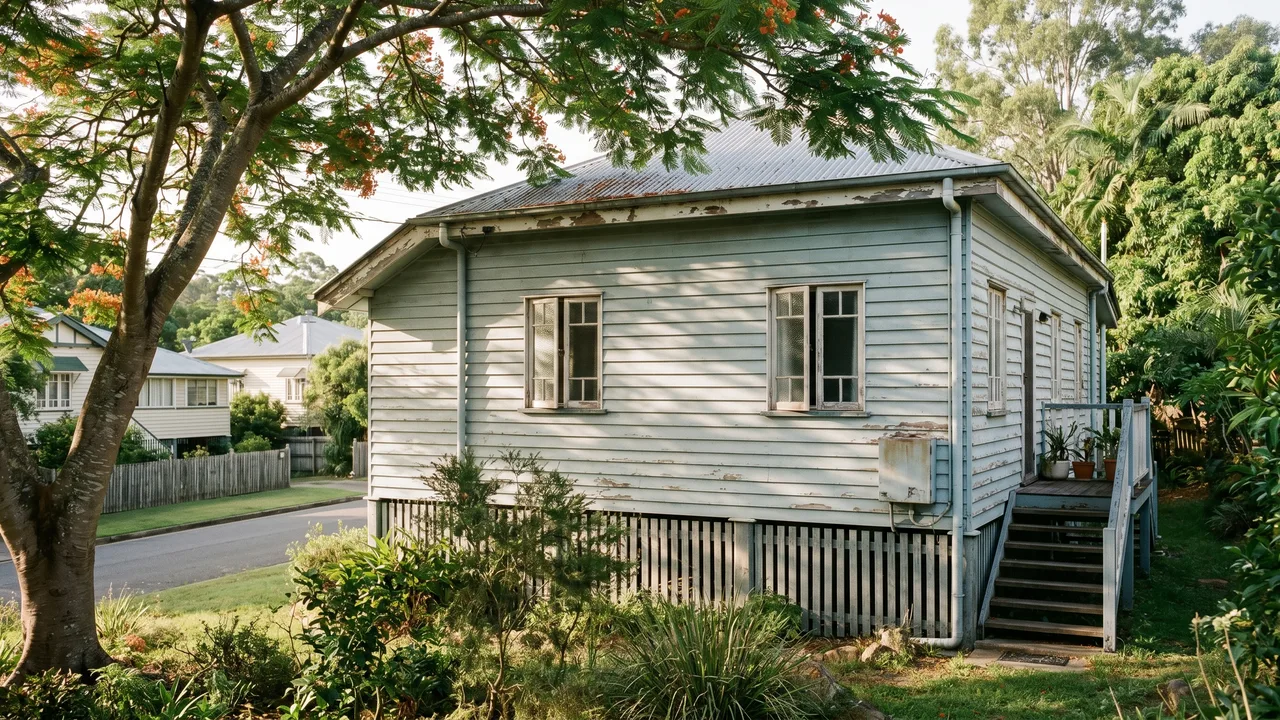
Most Queenslanders need a full exterior repaint every 8 to 12 years, though the honest answer depends on the timber condition, how much sun and rain the facade cops, and whether the last job was done properly. Some homes in sheltered positions hold paint for 14 years. Others, particularly north-facing facades in exposed positions, start showing stress at six.
That range is wide, but it is not arbitrary. Here is how to read it for your own home.
Why Timber Behaves Differently to Brick or Render
Queenslanders are almost always clad in VJ (vertical joint) boards or chamferboard, both of which are softwoods that expand and contract with temperature and humidity. Brisbane's climate is particularly hard on exterior timber: summer humidity sits above 70 percent for months, then dry winter winds pull moisture back out of the wood. That cycle is what eventually breaks the paint film, not UV alone.
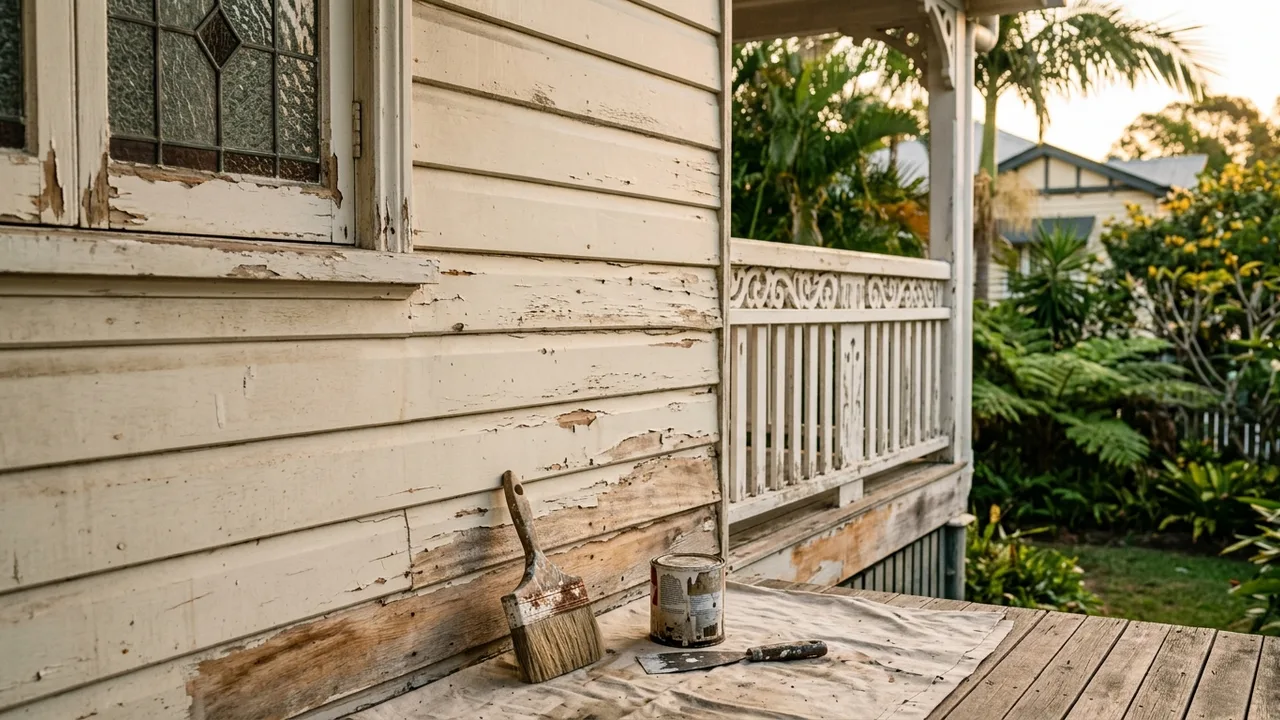
When the film cracks, water gets in behind it. The timber swells slightly, the crack widens, and eventually you get lifting, peeling, or bare patches. Once you are at that stage, preparation takes longer and costs more. Repainting before the film fails completely is almost always the cheaper option.
Brick and render homes in the same suburbs (and there are plenty in Toowong, Auchenflower, and Paddington) typically hold paint longer, partly because the substrate does not move as much. Render is not immune to cracking, but the mechanism is different and usually slower.
The Factors That Shorten the Cycle
A 10-year rule of thumb is a starting point, not a guarantee. Several things push the timeline in the wrong direction.
Aspect and sun exposure. A west-facing wall in Bardon or Red Hill that cops afternoon sun from November to March will break down faster than the same wall on the south side of the house. If your verandah wraps around a sunny elevation without much tree cover, inspect that face more often.
Tree coverage. Ashgrove and The Gap have heavy canopy in many streets. That shade protects paint from UV, but it also means slower drying after rain, more moisture sitting against the timber, and biological growth (mould, lichen, algae) appearing sooner. It is a trade-off: you gain UV protection, lose fast drying.
Salt air. This matters more for bayside suburbs than for the Inner West cluster we work across. Ashgrove, Bardon, and Red Hill are far enough from the bay that salt-driven degradation is not typically the primary factor. If you are in those suburbs and your paint is failing earlier than expected, look at aspect and surface prep before blaming salt.
The quality of the last job. Paint over dirty or unprepared timber will fail early regardless of the product used. If the previous painter skipped priming bare knots, painted over mould without treating it, or applied topcoats to damp boards, the clock started short. We see this regularly on homes that were repainted as a quick-sale cosmetic fix and now need proper remediation work five or six years later.
The product used. Premium exterior acrylic paints from established manufacturers typically carry a 10-year manufacturer warranty on a properly prepared surface. Budget products, or oil-based paints that have since gone brittle, often show stress earlier.
What to Actually Look For (An Honest Inspection)
You do not need a painter to tell you whether it is time. Stand back and look at each elevation in decent morning light.
- Chalking: Run your palm along the wall. A fine white powder is normal oxidation and is not an emergency. Heavy chalking where you come away with a fistful means the binder has degraded significantly.
- Cracking or checking: Hairline surface cracks in the paint film are early-stage. Long cracks that follow the wood grain down into bare timber mean moisture is already getting in.
- Peeling or lifting: Anywhere paint is physically separating from the substrate, prep work is now non-negotiable. The old paint must come off before anything new goes on.
- Mould or dark staining: Common on shaded southern walls and under dense canopy. Mould lives in the paint film, not just on the surface. Pressure washing alone does not kill it; treatment with a biocide before repainting does.
- Bare timber at joints: VJ board joints and window reveals are the highest-risk points on a Queenslander. If you can see grey, weathered timber at any join, that area needs attention now regardless of how good the flat walls look.
If you are seeing two or more of these at once across more than one elevation, you are in the repaint window.
Interior Painting: A Very Different Timeline
Interior repaints are driven by lifestyle, not weather. A typical interior in a family home holds up well for 7 to 10 years in living areas and hallways. Kitchens and bathrooms often need attention sooner (5 to 7 years) because steam and cooking grease break down the sheen layer and make walls harder to clean.
In older Queenslanders, the interior calculus changes slightly. Many pre-war homes in Ashgrove, Paddington, and Rosalie still have VJ lining boards throughout, the same material as the exterior. These hold paint well but show scuffs, yellowing, and nail-pop shadows more visibly than plasterboard. Heritage palettes with lower sheen levels tend to hide minor imperfections better than high-gloss finishes.
Ceilings deserve their own attention. Casement window condensation and roof leaks (both common in older Queenslanders) leave staining that no amount of cleaning removes. If the stain is active (wet in heavy rain), fix the source first. If it is historic, a stain-blocking primer before repainting stops it bleeding through the new coat.
The Cost of Waiting vs the Cost of Acting
A typical full exterior repaint on a standard single-storey Queenslander in our area runs somewhere between $3,500 and $7,500, depending on size, surface condition, and the amount of prep required. A two-storey home with significant decay work can push beyond that.
Waiting past the point of film failure adds to the prep bill. Scraping and sanding deteriorated paint takes real time, and if bare timber has been exposed long enough to grey out and develop surface checking, priming requirements increase. In practical terms, a job that would have cost $4,500 on a well-maintained surface might cost $6,000 once it has been left two or three years too long.
That is not a scare tactic. It is just how surface preparation pricing works. More prep, more hours, same result.
The other side of the equation is that repainting too early is also a waste of money. If your paint is chalking lightly but otherwise intact, cleaning the surface and touching up problem areas (joints, reveals, any bare spots) buys you several more years without a full repaint. We are honest about this when we assess a job. A touch-up and wash is sometimes the right answer.
A Sensible Approach for Most Homes in This Area
If your Queenslander was last repainted with quality products on a properly prepared surface, plan a thorough visual inspection at the 7-year mark. Check the highest-risk elevations: west and north-facing walls, any surface under dense canopy, all joints and reveals.
If things look solid at seven years, inspect again at nine. Most homes in Ashgrove, Bardon, and the surrounding suburbs land somewhere in the 9 to 11-year window for a full exterior repaint.
If you bought the home recently and do not know when it was last done, the chalking test and a close look at the joints will tell you more than the previous owner's memory. Grey, weathered timber visible anywhere is a clear signal to act before the next wet season.
We are happy to take a look and give you a straight assessment. No obligation to book, and we will tell you if it is not yet time.
Quick answers