Painter guide
What Drives the Cost of an Interior Paint Job in Brisbane?
What Actually Drives the Cost of an Interior Paint Job in Brisbane?
The short answer is: room count, surface condition, and paint quality. Those three factors do most of the heavy lifting. Everything else — access, ceiling height, colour changes, the age of the home — adjusts the number up or down from there.
If you're getting quotes on an interior repaint in Ashgrove, Paddington, Bardon or anywhere else in Brisbane's Inner West, here's an honest breakdown of what you're paying for and where the real trade-offs sit.
Room Count and Total Area
Painters typically price interior jobs by the room or by square metre of paintable surface, depending on the complexity of the layout. A standard three-bedroom home in the Inner West usually has around 400 to 550 square metres of wall and ceiling surface once you account for hallways, the kitchen and living areas. That's the kind of job that tends to fall somewhere in the $3,000 to $6,500 range, though the spread is wide for good reasons.
Individual room estimates as a rule of thumb:
- Bedroom (standard): $400 to $800
- Living or dining room: $600 to $1,200
- Kitchen (walls only, no cabinetry): $400 to $700
- Hallway and stairwell: $500 to $1,000 depending on height and length
These figures assume reasonable surface condition and a colour change of no more than one or two steps in tone. They shift considerably once you add in the factors below.
Surface Condition and Prep Work
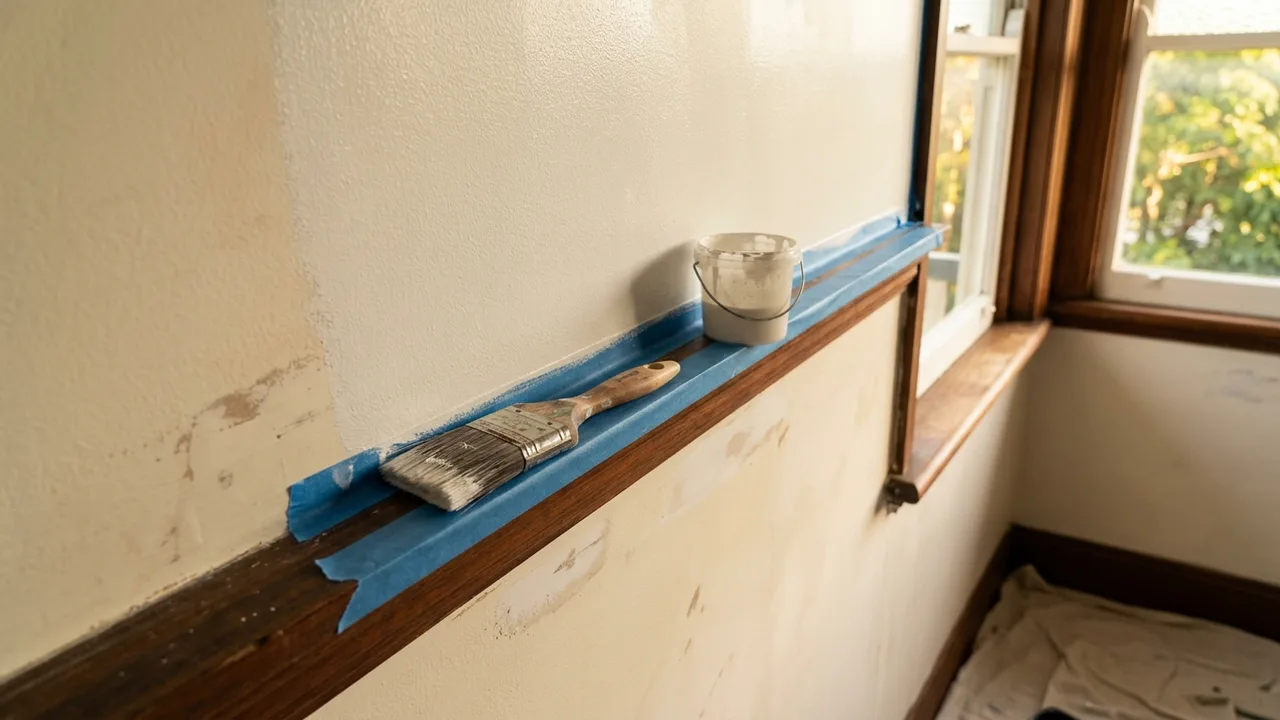
This is where a lot of homeowners get caught out. A painter who quotes low upfront may not have factored in the prep work your walls actually need. And good prep is genuinely where the durability of a paint job is made or lost.
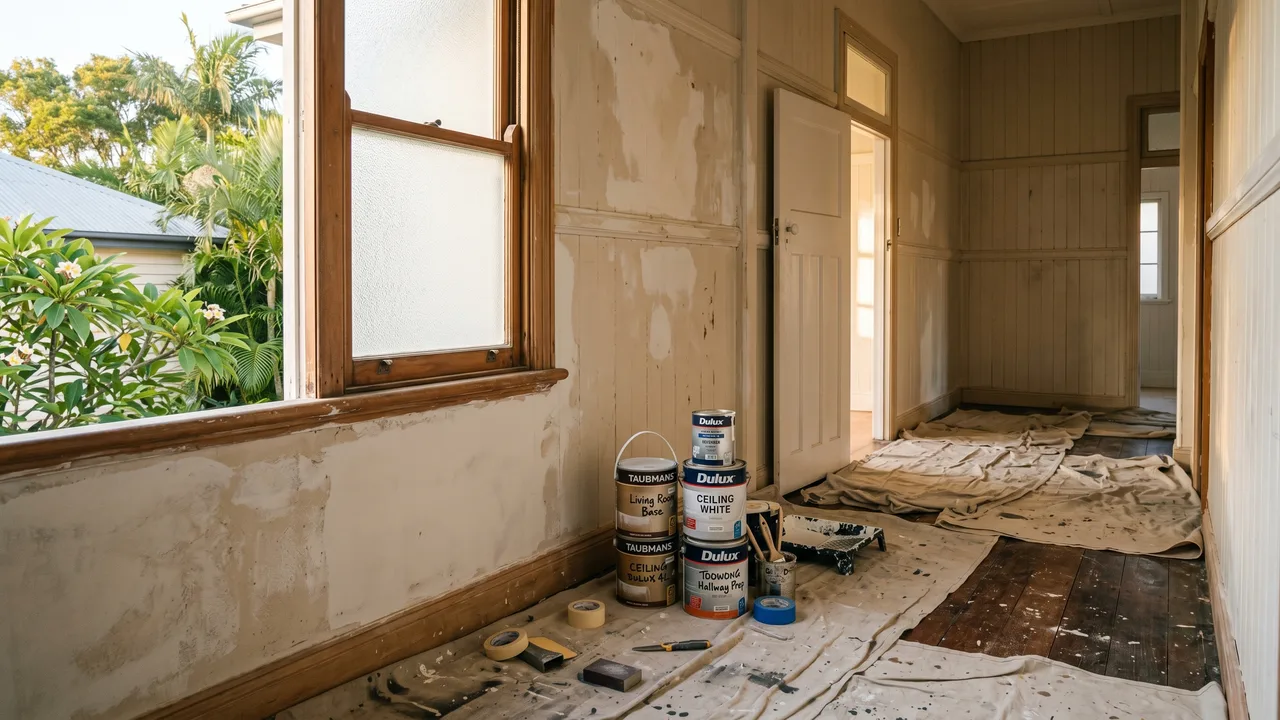
Older homes in Bardon, Red Hill, Ashgrove and Paddington often have walls that have been repainted multiple times over the decades. You might have cracking plaster around door frames, chalky or flaky old paint, water staining from a past leak, or the residue of oil-based enamel that needs specific treatment before water-based topcoats will adhere properly.
A full interior prep on a Queenslander-era home — filling cracks, sanding back, sealing stains, priming bare patches — can add $500 to $1,500 to a job compared with a newer home in The Gap where walls are in good nick. That's not the painter padding the quote; it's the actual labour and materials required to stop the new paint failing within two years.
When we quote a job, we walk through the rooms and note surface condition honestly. If the prep is significant, we itemise it separately so you can see exactly what you're paying for.
Ceiling Height and Access
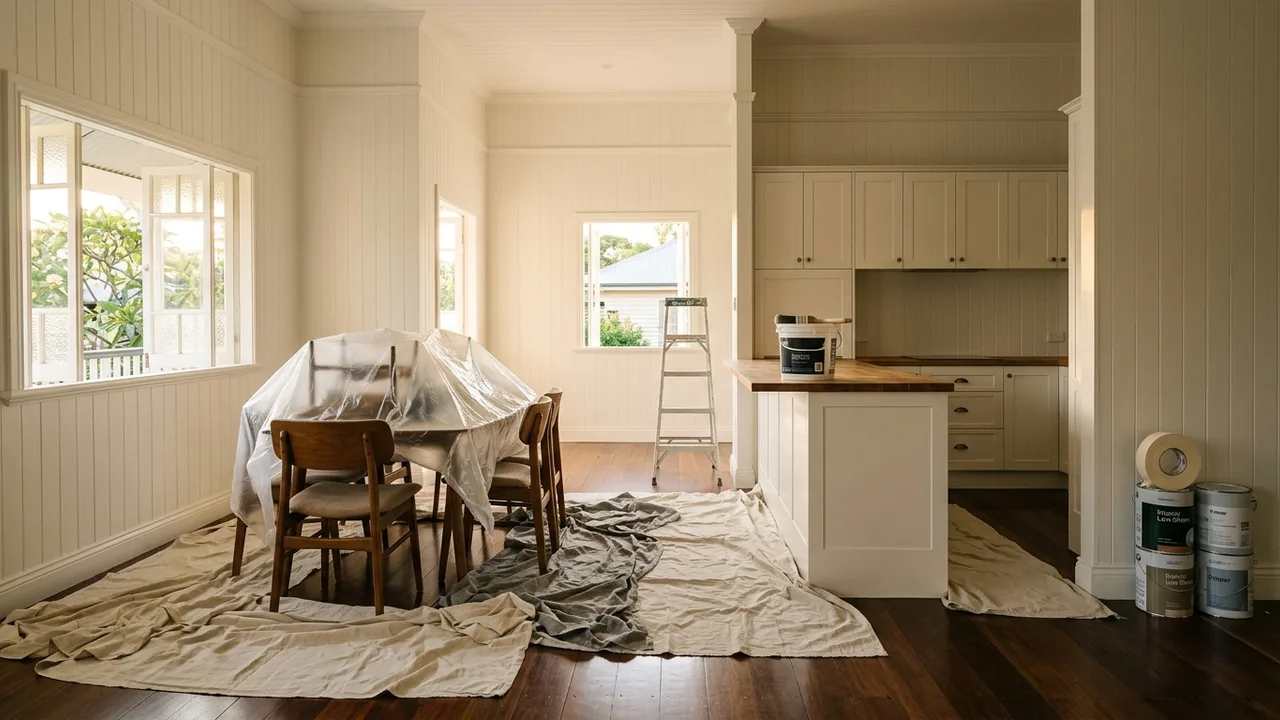
Standard ceiling heights in newer Brisbane homes run around 2.4 metres. Many Queenslanders and pre-war character homes in the Inner West have ceilings at 2.7 to 3.3 metres, sometimes higher in formal rooms. That height change matters more than most people expect.
Higher ceilings mean:
- More surface area on walls
- Cutting-in (edging) takes longer at height
- Taller ladders or scaffolding may be needed
- A job that looks like a three-bedroom repaint in square metres behaves more like a four-bedroom job in labour hours
If your home has pressed metal or ornate cornices — common in heritage homes around Paddington and Rosalie — cutting-in along intricate profiles takes real time. It's skilled work, and it's priced accordingly.
Paint Quality and the Number of Coats
Paint quality is one area where cutting corners genuinely costs you more over time. A cheap paint in a humid Brisbane climate (and the Inner West gets warm, humid summers) tends to scuff, yellow or show wear faster than a quality acrylic from a reputable brand. We typically use mid-to-premium range acrylics for interior walls because the washability and coverage hold up far better over five to ten years.
The number of coats affects cost directly. Most quality interior jobs need:
- One coat of primer or sealer on bare or patched surfaces
- Two topcoats for walls and ceilings
If you're making a significant colour change, say going from a dark charcoal to a light warm white, two topcoats may not achieve a clean result. A third coat adds time and materials. Some painters try to skip this; the result shows in uneven coverage or bleed-through within months.
The paint itself typically accounts for 20 to 30 per cent of the total job cost on a standard interior repaint. Going from a mid-range to a premium product might add $200 to $400 to a whole-house job — modest in the context of a $5,000 repaint, and usually worth it.
Colour Changes and Feature Walls
Painting a room the same colour it already is (a refresh) costs less than a significant colour change, full stop. The same logic applies to feature walls. A feature wall in a deep, saturated colour often needs three coats to look right, particularly on plasterboard that's never had a dark coat before.
If you're undecided on colour, that's completely fine — most paint suppliers offer test pot samples and Brisbane's lighting conditions (strong, warm, slightly northern) do change how a colour reads compared with what you see on a card. A colour that looks sophisticated in a Melbourne-based photo might read differently under Queensland sun through a north-facing window. It's worth taking an extra week to confirm your palette before the painter arrives.
The Trade-off: Full Repaint vs. Touch-Up vs. DIY
If budget is tight, you have genuine options, and they're worth thinking through honestly.
Touch-up painting (filling and painting scuffs, marks and small areas) costs far less than a full repaint and can extend the life of a good paint job by several years. The limitation is that unless the existing paint is relatively recent and the same product, patched areas can show — particularly in raking light near windows.
DIY interior painting is entirely doable for a homeowner with time and patience, particularly in simple rooms with standard ceilings. The realistic trade-off is time (a full interior repaint on a three-bedroom home is a multi-week project for most non-painters), quality of cut-in lines, and the learning curve on prep. You'll save on labour — typically 50 to 60 per cent of a painted job's cost — but you absorb all of that time yourself.
For heritage homes with complex cornices, high ceilings or difficult surfaces, the gap between a professional result and a careful DIY result tends to be more visible. That's not a sales pitch; it's just an honest observation about where the difficulty concentrates.
A Sensible Way to Approach Getting Quotes
Get at least two quotes and make sure they're itemised. A quote that says "$4,800 — full interior repaint" tells you almost nothing about what's included. A quote that breaks out prep work, number of coats, paint brand and room list lets you compare properly.
Ask specifically: what surface preparation is included, what paint product will be used, and what happens if additional prep is needed once work starts. Those three questions will tell you a lot about how a painter operates.
We cover interior repaints across Ashgrove, Paddington, Bardon, Auchenflower, Toowong, Milton, Rosalie, Red Hill and The Gap. Our quotes are written down, itemised, and include prep. If you'd like a figure for your home, get in touch — we're happy to have a look and give you a number that actually reflects the job.
Quick answers