Painter guide
How Brisbane's Humidity Destroys Paint and What to Do About It
How Brisbane's Humidity Destroys Paint and What to Do About It
Brisbane's subtropical humidity is the single biggest enemy of any paint job in the Inner West. Moisture works into the film, breaks the bond between paint and substrate, and sets off a chain of failures that no premium product can fully stop on its own. Understanding why it happens is the first step to making sure your next repaint actually lasts.
What Humidity Actually Does to a Paint Film
Paint is not a solid barrier. Even a well-applied, fully cured exterior coat is slightly permeable. In a dry climate, that barely matters. In Brisbane, where relative humidity sits above 60% for much of the year and regularly spikes past 80% overnight, it matters a great deal.
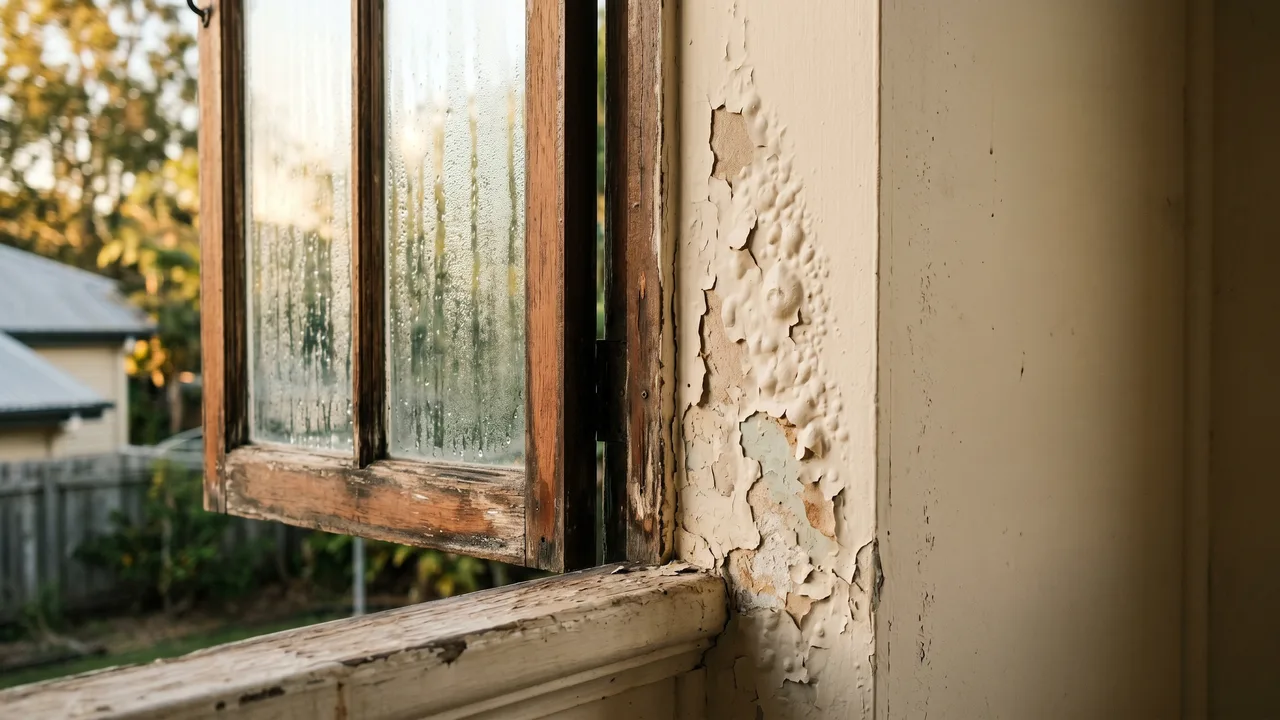
Here is the sequence of events that plays out on a typical Ashgrove or Bardon timber home:
- Moisture vapour passes through the paint film and reaches the substrate underneath.
- On timber, the wood swells as it absorbs moisture, then contracts again when it dries. Over dozens of cycles, the paint film cannot keep up with the movement.
- The bond between the paint and the timber weakens at a microscopic level before you can see any visible damage.
- Eventually, that weakness shows up as bubbling, flaking, or the paint lifting cleanly away from the surface in sheets.
On rendered walls, the mechanism is slightly different. Moisture gets into hairline cracks in the render, and if the substrate behind is brick or block, salt in the masonry can dissolve and migrate outward. You see this as a white powdery residue called efflorescence, and it will push paint off the wall no matter how well the paint itself was applied.
Fibro (fibre cement) homes, which are common in the Red Hill and Paddington area, have their own version of the problem. Old fibro can delaminate internally when it repeatedly wets and dries, and if the paint film bridges over that internal damage, it will crack along those lines.
The Role of Brisbane's Seasons and Microclimates
Brisbane does not have a simple wet season and dry season. The humidity pattern is more nuanced than that, and it affects how paint behaves at application time as much as during the life of the coat.
Summer in the Inner West brings warm, humid nights. Paint applied on a day that seems fine at 10 a.m. can end up trapping moisture if humidity spikes in the late afternoon before the coat has cured. This is one reason good surface timing matters more here than in Melbourne or Sydney.
There is also a meaningful difference between suburbs in this cluster. The Gap and the western edge of Bardon sit against the Taylor Range escarpment. Those properties get more afternoon shadow, which means slower drying and longer periods of damp on south-facing walls. Homes in Toowong and Auchenflower close to the river corridor can experience heavier morning dew. Neither of these is a disaster, but they change the prep and timing decisions a painter should make before touching a brush.
Bayside Brisbane deals with salt air on top of humidity, which accelerates corrosion on any metal elements. The Inner West cluster does not have that specific problem, but it is worth knowing if you own property in both areas.
Why Preparation Matters More Than the Paint Brand
This is where most DIY repaints and some budget jobs go wrong. There is a tendency to focus on which paint to buy rather than what happens before it goes on. In Brisbane's climate, the prep work carries most of the weight.
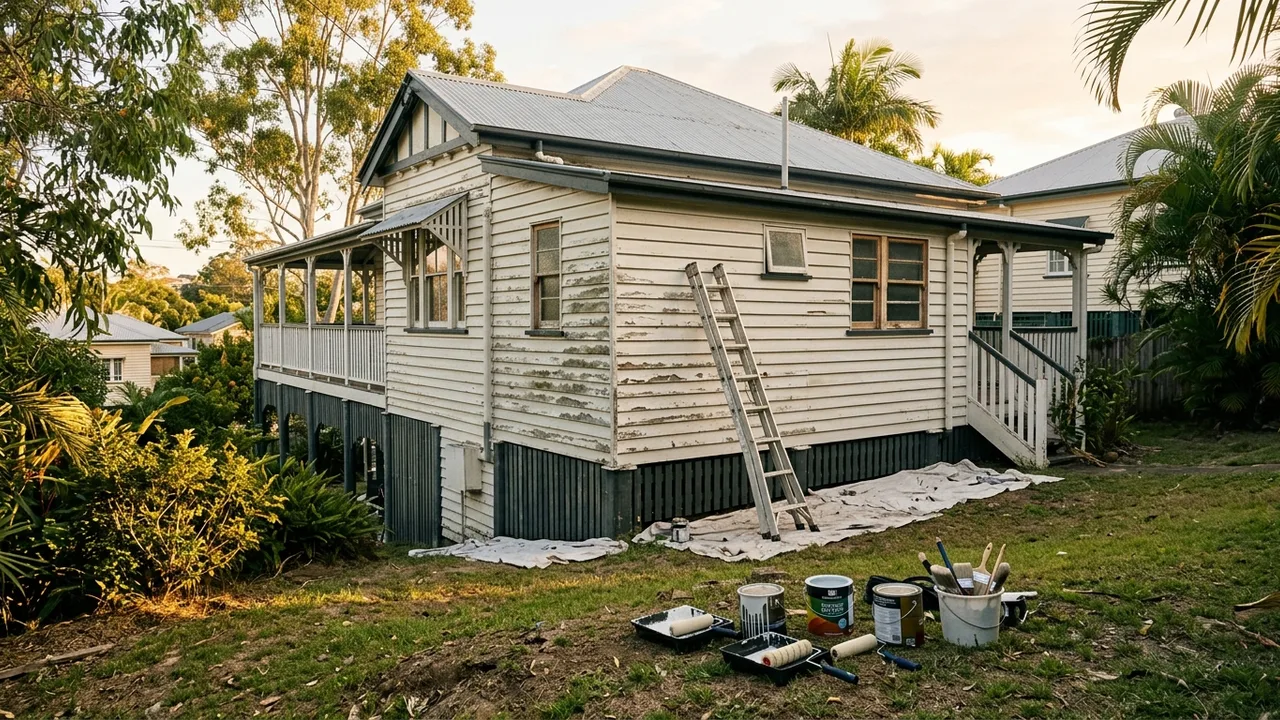
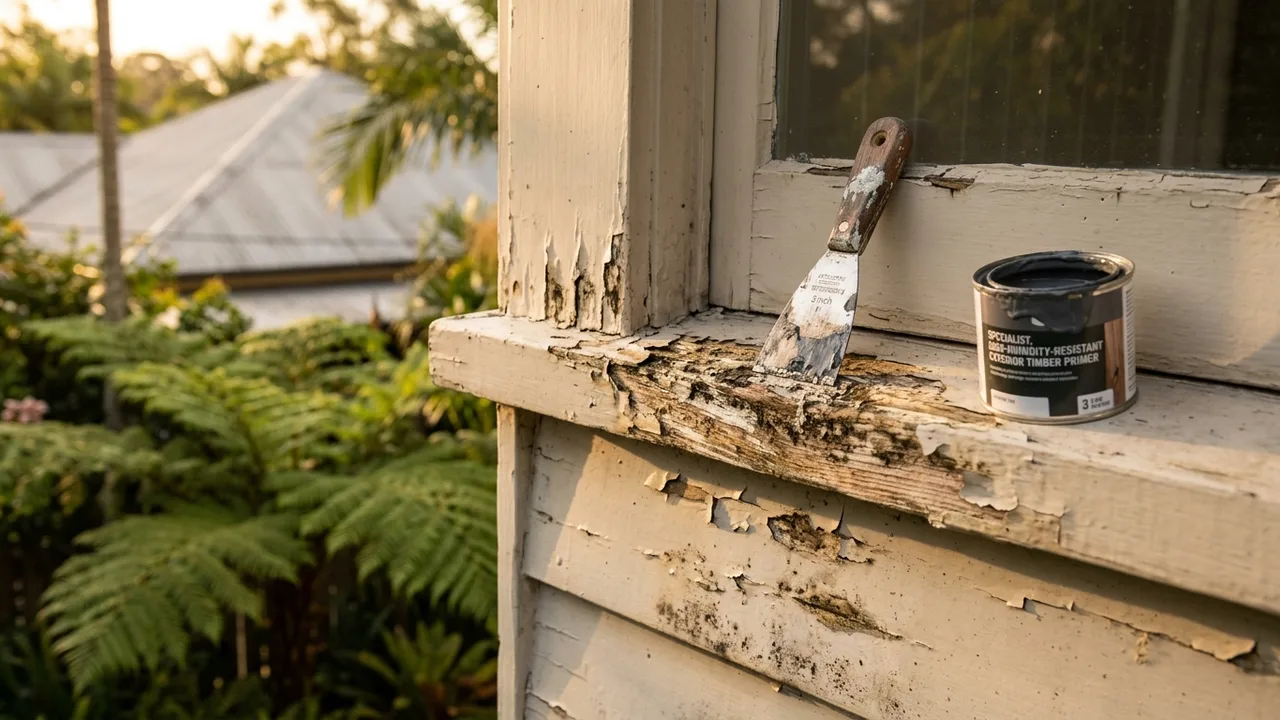
A few non-negotiable steps for any exterior repaint in this humidity:
- Pressure washing. In the Inner West, mould and mildew are almost inevitable on any surface that gets partial shade. Jacaranda canopy in Paddington and Ashgrove makes this especially pronounced, as organic debris sits on surfaces and holds moisture. Washing removes the mould, but the surface also needs a mould-inhibiting treatment before repainting, or the new coat will have the same problem within 12 to 18 months.
- Scraping and sanding. Any existing paint that is lifting, bubbling, or flaking needs to come off. Painting over it seals in the failure and the new coat will follow the old one off the wall, often faster than the original failed coat did.
- Priming the right substrate. Raw or bare timber needs a primer designed for high-moisture environments. Standard interior primers used outdoors, or exterior primers used without reading the substrate guidance, will not bond properly. For Queenslander homes with hardwood framing, an oil-based primer or a quality water-based penetrating primer gives a more reliable foundation than a cheap all-purpose product.
We include pressure washing, scraping, sanding and priming in our exterior quotes as standard, not as optional add-ons. If a quote you receive does not mention prep at all, that is worth asking about directly.
Interior Paint and Humidity: The Kitchen and Bathroom Problem
Humidity is not just an exterior concern. Inside an Inner West home, the kitchen and bathroom are the two spaces where moisture-related paint failure is most common. Steam, condensation, and inadequate ventilation combine to create conditions that standard wall paint cannot handle.
The trade-off here is straightforward. A flat or low-sheen interior paint looks beautiful and hides surface imperfections well. But in a bathroom or kitchen without strong ventilation, it will absorb moisture over time, allow mould to colonise below the surface, and start to look tired within two to three years.
A semi-gloss or gloss finish in those rooms is more reflective, which some people find less attractive, but it is far easier to wipe down and far more resistant to moisture penetration. If aesthetics are the priority, there is a middle ground: moisture-resistant low-sheen products that cost more per litre but behave significantly better. For a typical Brisbane bathroom repaint, the extra cost of a specialist product over a standard wall paint is usually $80 to $150. The cost difference in labour to redo the job two years early is far higher.
Choosing Products That Suit the Climate
Not all exterior paints are equal in humidity resistance, and the right choice depends on the substrate as much as the brand.
For timber homes, a flexible acrylic is typically the right exterior topcoat. Flexibility matters because timber moves, and a paint film that cannot flex will crack. Avoid cheap alkyd (oil-based) topcoats on timber in this climate; they can look good initially but become brittle and crack-prone as they age, especially on north-facing walls that get intense UV.
For render, a masonry paint with a breathable formulation is worth the extra cost. A paint that traps vapour inside a rendered wall will eventually cause the render itself to crack as moisture pressure builds up. Breathable masonry coatings allow vapour to pass through while keeping liquid water out.
For Colorbond roofs, which are common across Ashgrove, Bardon and The Gap, a roof-specific coating is a different product category again. We use coatings formulated for metal roofing rather than repurposing standard exterior paint, because the thermal expansion on a metal roof in a Brisbane summer is well beyond what a standard film can handle.
A Practical Maintenance Plan for Inner West Homes
Rather than waiting for visible failure, a simple maintenance routine will extend the life of any paint job significantly.
Once a year, wash the exterior. A garden hose and a soft brush is enough for most surfaces; a pressure washer on a low setting for areas with heavy mould build-up. Check the eaves, window sills and any horizontal ledges where water pools. These are the first places failure shows up, and catching them early with a small spot repair is far cheaper than a full repaint brought forward by two or three years.
Seal any gaps around windows and doors with a paintable acrylic gap filler before they allow water ingress. In older Queenslanders, the junction between weatherboards is a consistent weak point. A tube of gap filler and an hour's work can meaningfully extend the paint life on an entire wall.
A full exterior repaint on an Inner West home typically lasts seven to ten years when prep is done properly and the product suits the substrate. Cutting corners on prep tends to produce a result that starts failing at three to four years, which means two repaints in the time one good job would have lasted.
Closing Thoughts
Brisbane's humidity is not going anywhere, and no paint product will simply ignore it. What makes the difference is understanding the mechanism, doing the prep work honestly, choosing products that match the substrate and climate, and keeping up with basic maintenance between paint jobs.
If you are weighing up whether a repaint is needed now or can wait, the honest answer usually comes from looking at the condition of horizontal surfaces and the south-facing walls. If those are holding up, the paint job probably has some life left. If they are showing signs of failure, waiting rarely saves money.
We are happy to take a look and give you a straight assessment. No pressure, no obligation; just a useful conversation about what your home actually needs.
Quick answers