Painter guide
How to Paint a Rendered Home Without It Cracking in Two Years
The Short Answer First
The main reason rendered homes crack within two years is rushing past preparation and choosing the wrong paint. Get those two things right, and a quality exterior repaint on a Brisbane rendered home will typically last eight to twelve years before it needs attention again.
That is the headline answered. Everything below explains the how.
Why Render Cracks After Painting (and Why Brisbane Makes It Worse)
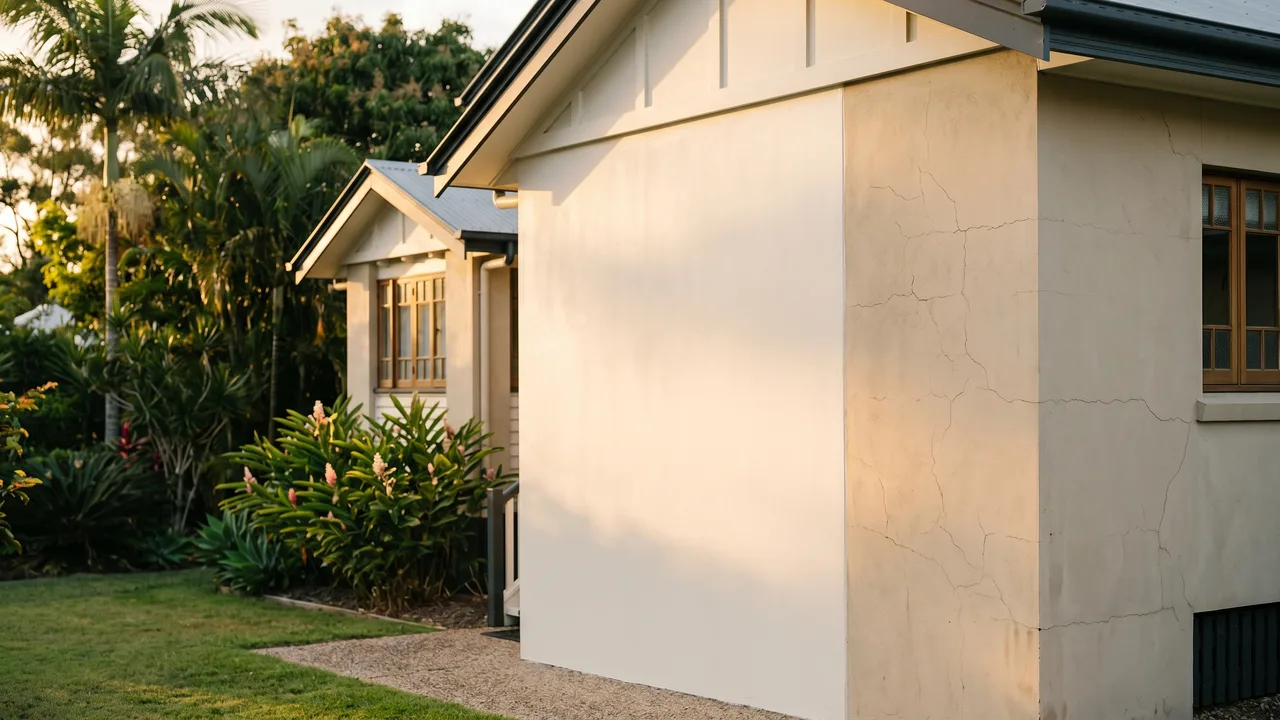
Render is a brittle substrate. Once it is painted over, any movement in the render has nowhere to go except through the paint film. In Brisbane's Inner West, that movement happens constantly.
Ashgrove, Bardon and Red Hill sit on land with reactive clay soils. Those soils expand when wet and contract when dry. Your slab and footings shift slightly with every rain event and every dry spell. The walls flex with them. Add Brisbane's intense UV (which degrades paint binders faster than in cooler climates) and the city's high humidity in summer followed by dry westerly winds in autumn, and you have a substrate that is physically asking a lot of whatever coating sits on top.
There are three common failure modes worth knowing:
- Map cracking (crazing): A network of fine cracks across the surface. Usually caused by painting over a coat that has not fully cured, or by applying topcoat in direct afternoon sun so the surface dries faster than the film underneath.
- Flaking at edges and window reveals: Often a primer adhesion failure. Frequently traced back to skipping primer or using an interior primer on an exterior surface.
- Hairline cracks that reopen after painting: These were structural or shrinkage cracks in the render itself that were filled, painted over, and then moved again. They will keep moving unless the underlying cause is fixed or the fill product is flexible enough to accommodate it.
Surface Preparation: Where Most Jobs Fail or Succeed
Honest advice: preparation takes longer than the painting. On a two-storey rendered home in Toowong or Auchenflower, plan for preparation to represent roughly half the total job time.
The sequence matters.
Pressure washing comes first. You need to remove chalk (the powdery residue from UV-degraded old paint), mould, and surface contamination. A pressure wash at around 2000-3000 PSI, followed by drying time of at least 24-48 hours, is the baseline. In Brisbane's humidity over summer, 48 hours is safer than 24.
Crack inspection and repair comes next, and this is where corners get cut most often. Every crack needs to be assessed differently. A hairline crack under 0.3 mm is generally stable and can be bridged by a quality flexible primer and topcoat. A crack between 0.3 mm and 1 mm should be raked out slightly, filled with a flexible acrylic filler, and primed before topcoat goes on. Cracks wider than 1 mm are worth investigating. They may indicate ongoing movement, and filling them with a rigid product will just reopen the crack through the paint within months.
Priming is non-negotiable on bare or repaired render. A penetrating alkali-resistant primer serves two purposes: it seals the alkalinity of cement render (which will attack some paint formulations from underneath) and it gives the topcoat something to grip. Skipping primer to save $150-$200 in materials is a common false economy.
Choosing the Right Paint: Flexibility and Breathability Both Matter
Not all exterior paints are equal on render, and the choice depends partly on the age and condition of the render.
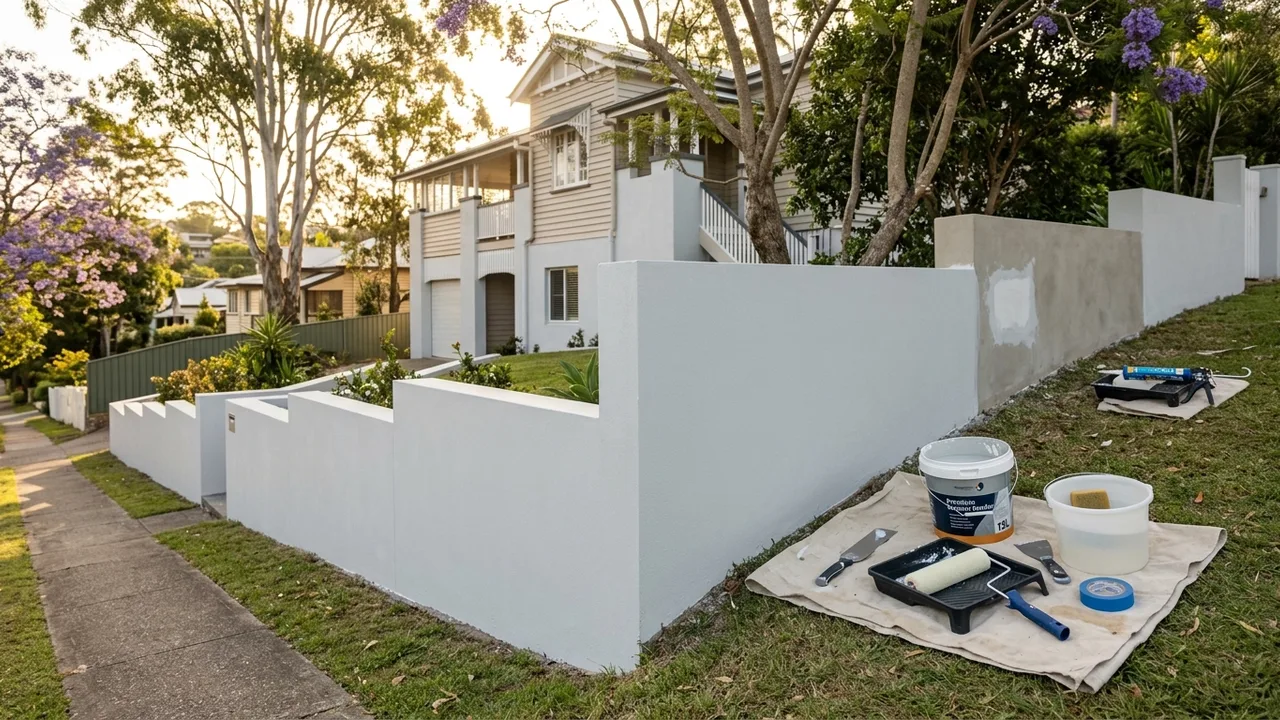
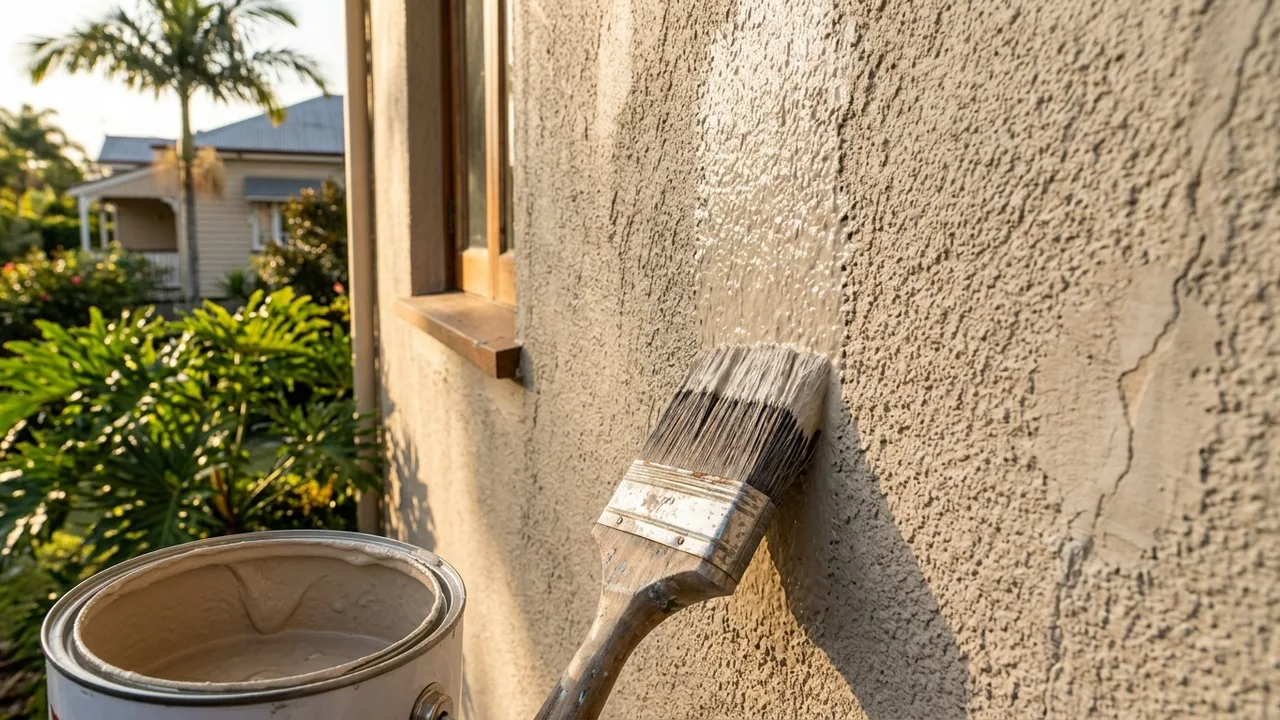
For rendered homes in the Inner West, we generally recommend a textured or smooth elastomeric acrylic for the topcoat. Elastomeric paints are specifically formulated to flex with substrate movement. They cost more per litre than standard exterior acrylics, typically $80-$130 per 10 litres versus $50-$80 for standard grades, but on a reactive clay site or an older home with fine cracking, the extra cost is usually recovered in longevity.
Breathability matters too. Render is a porous material, and moisture vapour passes through walls. A vapour-impermeable paint (some budget gloss products fall into this category) traps moisture behind the film, which leads to bubbling and delamination. Look for paints described as "breathable" or rated with a good moisture vapour transmission rate. Most quality Australian exterior acrylic brands meet this requirement, but it is worth checking the technical data sheet rather than just the label.
One trade-off worth naming: textured elastomeric paints are harder to clean over time and can trap more pollen and dust than a smoother finish. In Ashgrove and surrounds, jacaranda season in November and December means plenty of purple pollen in gutters and on walls. A smooth finish is easier to wash down. Choose based on what matters more to you.
Timing and Weather: Brisbane Has Its Own Rules
Experienced painters in Brisbane work around the weather in ways that would surprise people in cooler climates.
The general rule is: do not paint in direct sun on hot days. Render surfaces in Brisbane's afternoon western sun can reach 50-60°C in summer. Paint applied to a surface that hot flashes off (the solvent evaporates before the film has bonded properly), and you get a brittle, poorly-adhered coat that will crack or flake within months.
The ideal painting window for exterior render in Brisbane is:
- Morning, starting after the dew has cleared (usually around 8-9 am in summer)
- Stopping before early afternoon on days over 28°C
- Avoiding painting when rain is forecast within 4 hours
- Avoiding painting when surface temperature is below 10°C (rare in Brisbane but possible in The Gap on winter mornings)
Autumn (March to May) and late winter to early spring (August to September) are typically the best seasons for exterior render repaints in this part of Brisbane. Lower humidity, milder temperatures, and less chance of afternoon storms make for better curing conditions.
The DIY vs Professional Trade-off
A rendered home is achievable as a DIY job if you are comfortable on a ladder, have the patience to prepare properly, and are willing to hire the right equipment. Pressure washers are available for around $80-$120 per day through hire companies. A decent airless sprayer hire adds another $120-$180 per day.
Where DIY most often goes wrong on render is the crack assessment step. It takes some experience to distinguish a stable hairline from an active movement crack, and treating them the same way leads to failure. It also takes a steady hand with a spray gun to achieve consistent film thickness on a textured surface. Too thin and you lose elasticity; too thick and you trap moisture.
A professional repaint on a standard rendered home in the Inner West, say a 200-250 square metre single storey in Paddington or Rosalie, typically runs $3,500 to $6,500 depending on condition, access, and colour changes. A two-storey rendered home with significant crack repair can reach $8,000-$12,000. Those numbers include preparation, primer, two topcoats, and incidentals like masking and line work around windows.
If your render has multiple active cracks, significant chalking, or signs of moisture penetration, professional prep is usually the better investment. The paint is only as good as what is under it.
A Sensible Closing Recommendation
If you have read this far, you are clearly not looking for the cheapest quote. You want a repaint that actually lasts.
Before you book anyone, including us, ask these specific questions:
- Will you pressure wash and allow proper drying time before any prep work starts?
- How do you assess cracks, and what fill product do you use for active versus stable cracks?
- What primer are you using, and is it rated for cement render?
- What paint product are you specifying, and can I see the technical data sheet?
A painter who answers these confidently and specifically is worth listening to. One who brushes past them is worth reconsidering.
If you are in Ashgrove, Bardon, Red Hill, Paddington or any of the suburbs we cover in the Inner West cluster, we are happy to walk a rendered home with you, explain what we are seeing, and give you a written quote that spells out the preparation process, not just the paint colours. No obligation, no pressure. A good quote should be useful to you whether you hire us or not.
Quick answers